
Kazakhstan Ranks 9th Globally for Projected GDP Per Capita Growth by 2030

@TengriNews
Kazakhstan has secured a position among the top ten developing economies projected to achieve the most significant growth in GDP per capita in the coming years. According to a ranking compiled by Visual Capitalist, which utilized data from the International Monetary Fund, Kazakhstan holds ninth place with an expected increase of approximately 29 percent by 2030.
The ranking highlights a broader global trend: a gradual shift in economic momentum from developed nations toward emerging markets. This reflects a long-term rebalancing of wealth concentration, increasingly favoring the Global South over the Global North.
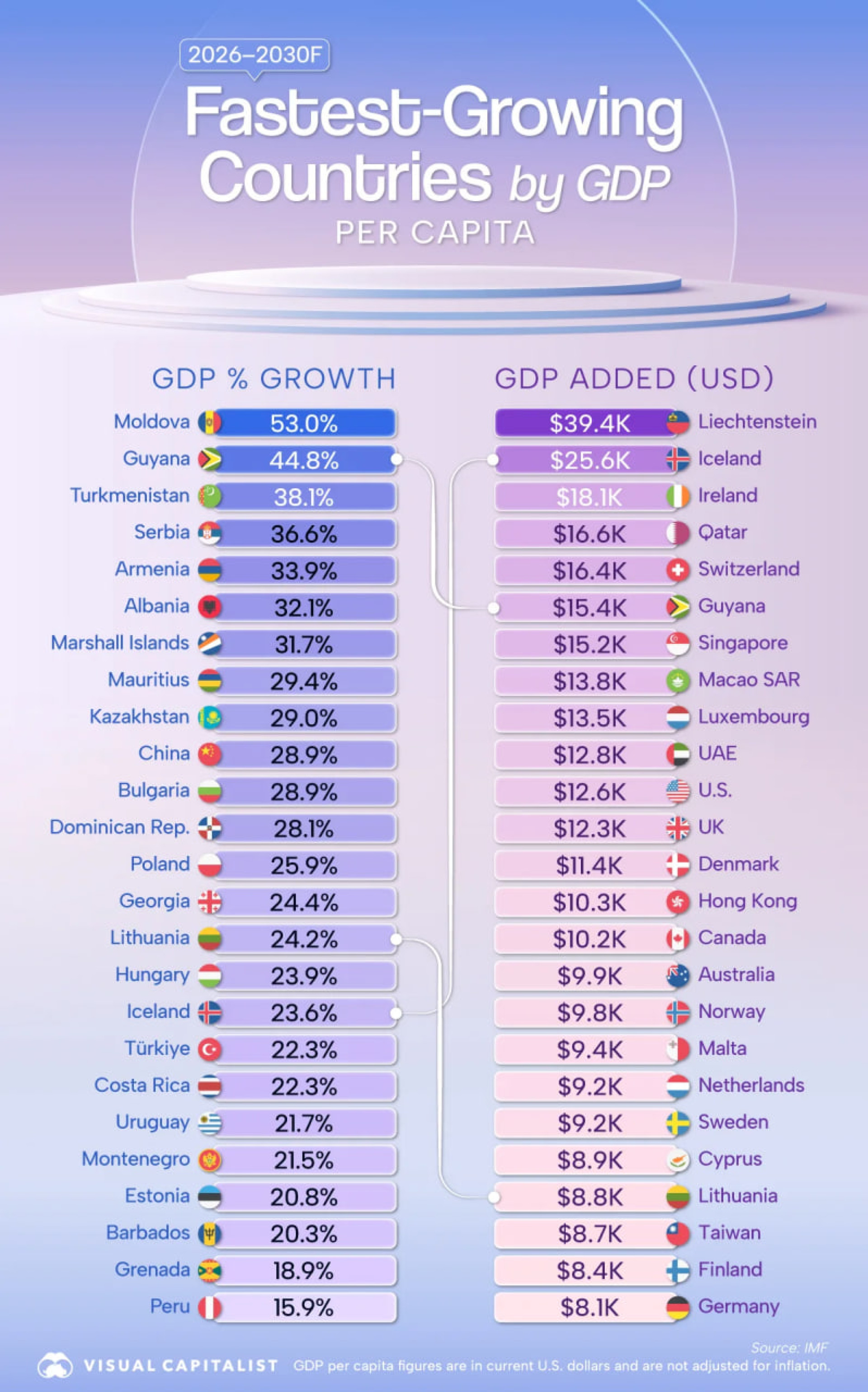
However, experts caution that such projections are not automatic guarantees. The realization of this potential hinges critically on domestic policy and institutional quality. For growth to be sustainable, a consistent long-term strategy is essential, focusing on investments in human capital, infrastructure, and innovation.
Professor Greg Simons of Daffodil International University notes that while Kazakhstan possesses significant potential to become a key player among Eurasian emerging economies, it must navigate a complex geo-economic landscape. He warns against over-reliance on any single center of power, drawing lessons from other regions.
"The forecast itself is not a guarantee—its implementation directly depends on the quality of state policy and the institutional environment," emphasized Professor Simons.
The country's energy sector remains a key advantage, given its continued importance for the global economy. Yet, strategic diversification away from excessive dependence on any single resource is cited as crucial for long-term development.
Experts point to Kazakhstan's ongoing reform agenda as a foundational element for unlocking its economic potential. Success will depend on political will, strategic vision, and consistent implementation. Furthermore, maintaining balanced international partnerships based on mutual benefit and cooperation—rather than confrontation—is viewed as a pragmatic and sustainable approach in an unstable geopolitical climate.
Ultimately, strengthening Kazakhstan's role as a regional economic hub will require effectively aligning internal reforms with its external economic strategy.
Source: tengrinews.kz